WERTHER
Jules Massenet
Conductor:
Gintaras Rinkevičius
Director:
Dalia Ibelhauptaitė

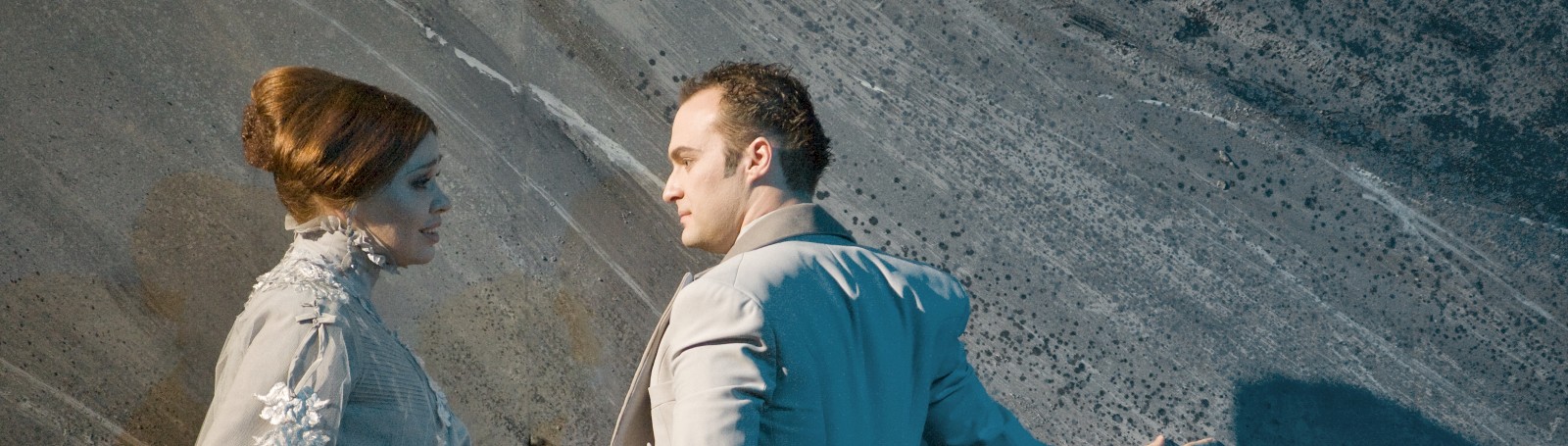
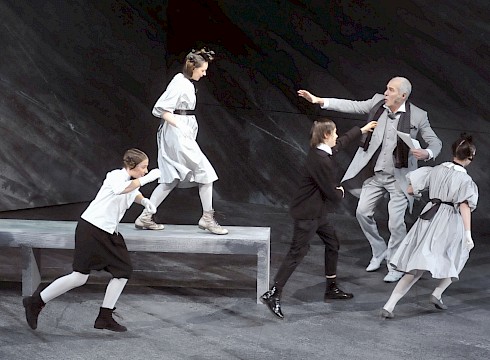
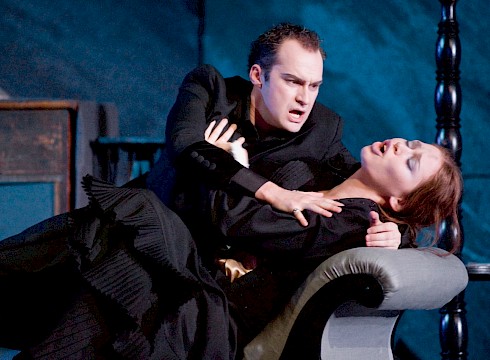
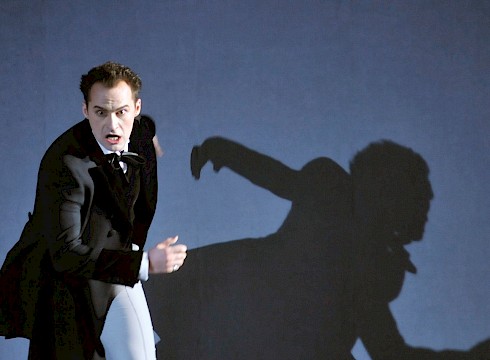
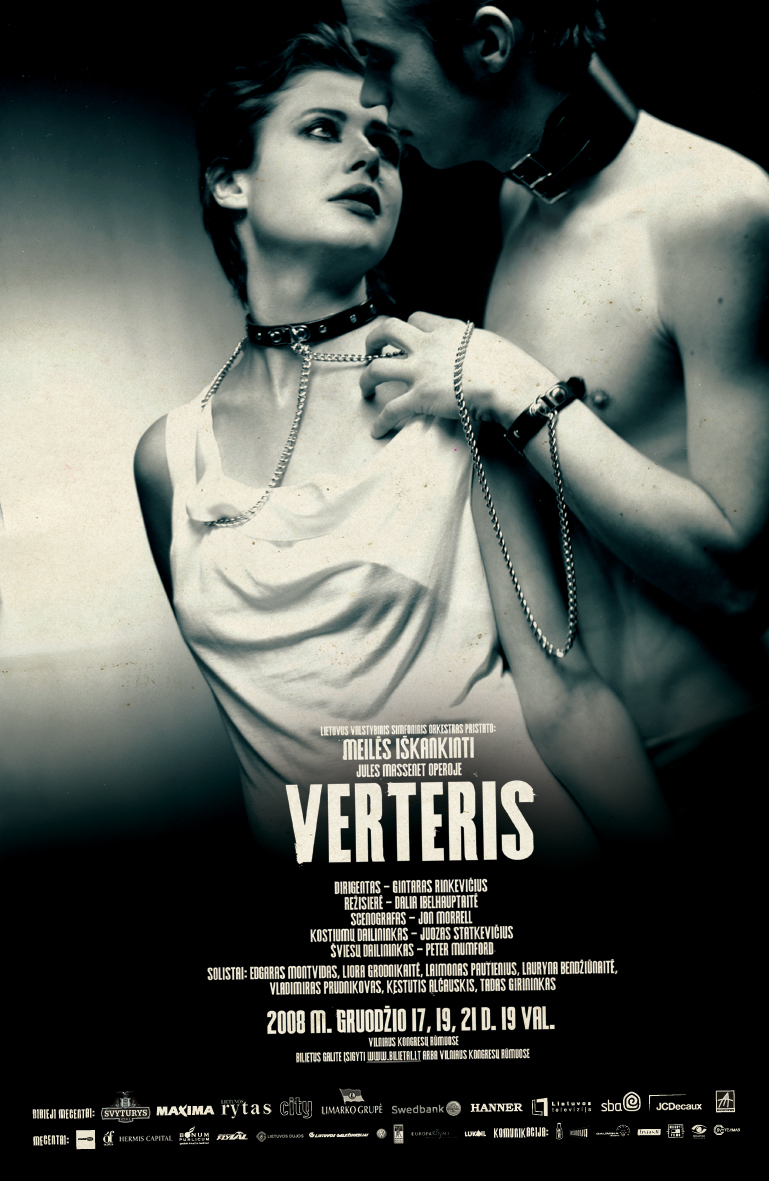
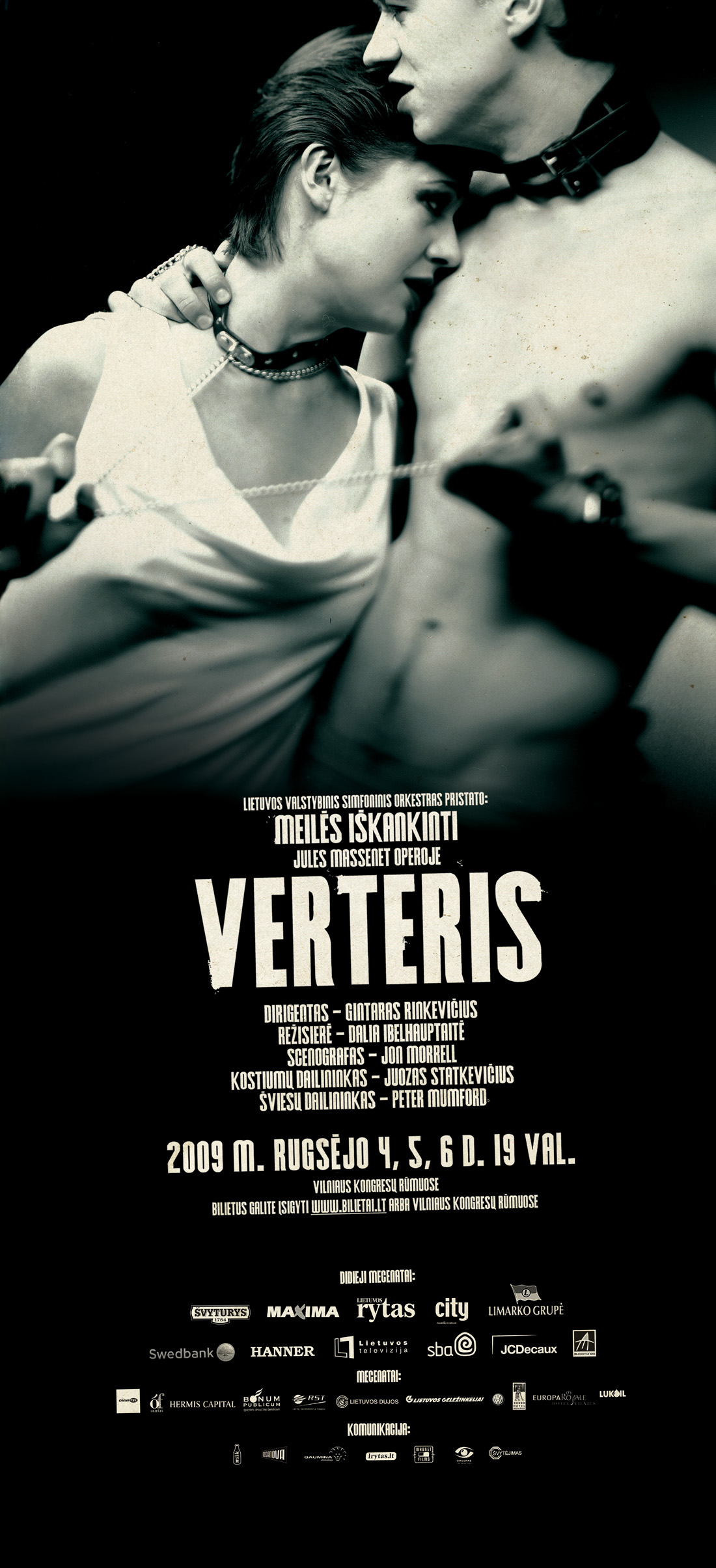
This chamber production is very atypical of VCO’s style of intensely visual shows. It is a performance that focuses on human beings, their inner world, psychology, and emotions. Massenet’s “Werther”, surrounded by a minimalist stage set, highlights not only the drama of the main characters, but also the power of talented singers. It is VCO’s first encounter with the exquisite musicality and the intimate sound of Massenet’s French opera.
The seemingly minimalist production is dominated by the expressionist canvas of Werther’s inner emotions painted by J. W. Goethe and J. Massenet. As soon as “Die Leiden des jungen Werthers” was written in 1774, the story of Werther overwhelmed the society and became a behavior model for many young men who felt prepared to die in the name of love. They copied Werther’s dress style - a light blue cloak and yellow breeches, composed long and emotional letters to their lovers, wrote poems and recited them right on the spot. Goethe’s novel caused a real revolution, whereas committing suicide for love became excitingly fashionable.
Modern people wish to be romantic, they long for the 19th century’s real emotions, passionate love, and sacrifice. In the dreamer Werther, every one of us wants to see a piece of oneself; we believe that we would also be capable of such love and sacrifice. Charlotte's hesitations might remind us of our youth when we had to choose between desire and passion or a secure and comfortable life.
Juozas Statkevičius surpassed himself by designing, at first glance, seemingly consistent and indistinguishable greyish costumes. In fact, every costume is adorned with intrinsic details, appliqués, cut-outs, and textures. It is genuinely surprising how rich and versatile the color grey can be. In the visual part of the production, the expressionist palette of emotions was vividly conveyed by Peter Mumford’s lighting.
In 2009, Edgaras Montvidas was awarded the Golden Stage Cross in the Opera Soloist of the Year category for his role as Werther.
Creators


Performers

Werther
Andrew Richards (USA)


Charlotte
Wendy Dawn Thompson (New Zealand)

Albert
Lars Møller (Denmark)

Sophie
Gunta Gelgotė


Participating in performance
Boy’s choir “Ažuoliukas“
Leader Vytautas Miškinis
Girl’s choir “Liepaitės”
Leader Artūras Dambrauskas
Premiere: 2008 December 17
“Werther” - Longing for Times Past
Today the French composer Jules Émile Frédéric Massenet (1842-1912) is perhaps best known as the author of two operas - Manon and Werther. In the latter he gave musical voice to the story of the main character of Johann Wolfgang von Goethe’s novel, who became a symbol of the romantic hero. In total, Massenet’s operatic legacy consists of about forty works of this genre, while twenty-five operas were published.
It seems that the composer had discovered the secret of his success, because society eagerly awaited each new composition, and, as rarely happens, creative work became a profitable source of livelihood for the composer. Perhaps one of the reasons was Massenet’s ability to give sincere intimacy to musical sounds and to reveal real emotions. The composer possessed an exceptional gift for melody, and he felt an inclination toward opera from childhood, because already at the age of ten he began studying at the Paris Conservatory with one of the best opera composers of the time, Ambroise Thomas. He also encountered opera in the evenings - the young man was extraordinarily fortunate, because fourteen-year-old Massenet, forced to look for work, was accepted into the orchestra of the Paris Théâtre Lyrique as a timpanist.
At the time when Werther became the focus of Massenet’s attention, he was a productive composer who had gained recognition and was receiving successful commissions. The idea of the opera dates back to 1880 - the composer himself mentioned it in a letter - but for several years it simply “floated in the air.” In 1885 Massenet’s publisher Georges Hartmann already actively spoke about a new subject - Goethe’s novel.
Massenet began writing Werther only after finishing another opera. The composer felt exhausted and the writing progressed with difficulty. Here Hartmann proved to be an excellent manager. Knowing perfectly well that Massenet needed only the right impulse, the publisher organized a trip to Bayreuth, where Massenet listened to Parsifal, and also visited the town of Wetzlar, north of Frankfurt. It was here, a hundred years earlier, that Goethe conceived the idea of writing his famous novel. It was also here that Massenet for the first time read the novel translated into French (until then he had worked only with the libretto). The journey and the impressions experienced there affected the artist’s imagination so strongly that they greatly accelerated the writing. At the beginning of 1887 the opera was already finished, but the premiere of Werther took place only on February 16, 1892.
Although he had received more than one invitation to stage his operas in Paris theatres, the composer cautiously waited for the most suitable opportunity for the premiere of Werther. Only after six years did he bring the score of Werther to light. In fact, the world premiere of the opera, which sounded in Vienna, was the German version. The original French version was performed at the end of the same year - on December 27, 1892 in Geneva. Three weeks later Massenet’s lyric drama was shown at the Paris Opéra-Comique, but the theatre director immediately removed it from the repertoire - he was frightened by the apparent senselessness of the plot (to commit suicide for love?!) and the gloom of the music. Meanwhile the “Werther wave” was rising - in other cities of France, throughout Europe, and even in America the opera was successfully staged. Werther also returned to the Paris stage. True, only in 1903, but from then on it no longer left the central positions of the French repertoire (during the twentieth century in Paris this opera was performed more than 1300 times).
The basis of the opera was Goethe’s novel The Sorrows of Young Werther (Die Leiden des jungen Werther, 1774), which embodied the Sturm und Drang movement in German literature and became one of its brightest symbols. In fact, the novel was based on real events that Goethe experienced in Wetzlar in 1771 and 1772. In the literary work the writer combined two stories that had occurred in real life - his own love story and a tragedy he had observed nearby. At the age of twenty-three (the same age as the novel’s main hero) Goethe truly fell in love with Charlotte Buff (whom he called by the diminutive name Lotte) - a young woman who had promised her dying mother to take care of sixteen younger brothers and sisters. However Lotte married Johann Georg Christian Kestner. At that time their friend Karl Wilhelm Jerusalem was unhappily in love with a married woman and, after borrowing a pistol from Lotte’s husband, shot himself. Goethe adapted these stories in his own way and created an epistolary novel that became a bestseller immediately after its publication.
Music historians still raise the question why Massenet became interested in the story of Werther. The composer undoubtedly struck the very center of the target - he perfectly combined his talent as a melodist with the fate of the romantic hero. It seems that Massenet longed for the chamber-like atmosphere that breathed from the sadness-marked pages of Goethe. The composer wished to write a lyrical drama, an intimate musical diary in which there is no place for imposing ensembles, pompous choral numbers or mass ballet scenes. Werther resembles a singing theatre and, hard as it may be to believe, only in a few places can more than one or two voices be heard at the same time. One of the most important scenes is Charlotte’s monologue immersed in memories. The strongest emotional tension is created when only a single character is on stage, speaking with letters.
Massenet’s personal relationship with this work is perhaps even better revealed by the fact that he used the manuscript of Werther almost like a diary - in the margins of the score he left notes about the day’s weather, events in his life, or various trifles. It would seem that composing Werther was not work or duty for him, but an intimate and sensitive dialogue between the pages of the novel and the artist, which grew into a personal relationship with the work being written and with its plot.
The story of Werther shocked society when it first appeared, and it became a model for many young people who were just as ready to die for their love. They dressed in “Werther-style” clothing - a blue coat and yellow breeches, wrote long and emotional letters, composed poems and immediately recited them to their beloved. Goethe’s novel created a real movement, and dying for love became an exciting fashion.
At all times a person has been at least a little romantic by nature. Perhaps that is why today we feel nostalgia for that era and its exalted emotions. We long for mad passion, unconditional love, the ability to fight courageously to the end for what we believe in, and we look with envy at the portrait of the dreaming young man as a symbol of a special life filled with freedom.
Massenet’s librettists created a vivid drama in which the line of Charlotte and Werther intersects with the quiet everyday life of Bailly’s children. It is the meeting of suffering love and domestic idyll, of Charlotte’s passion and the duty of life. It is the conflict between stormy and fearless youth and the traditional norms of society, in which the human soul and feelings must give way to reason and calculation. This dilemma sounds painfully relevant even today.
More than two hundred years have passed since Goethe wrote the novel, and Massenet’s opera is already more than a century old. Yet Massenet’s Werther, which in the second half of the twentieth century could not boast of special attention from opera producers, has recently been appearing more and more often in their field of vision - today many theatres around the world are staging Werther (both the drama and the opera). It seems we are witnessing the second birth of this story. Does this mean that we have missed “Werther-like” experiences? Most likely yes, because Werther radiates true and unfeigned feelings.
Related news
Bohemians Turn 20: Anniversary Season to Culminate in Norma with Asmik Grigorian

Sustainability in opera: how Juozas Statkevičius’s costumes were given new life a decade later

When everything hangs in the balance on stage: the invisible heroines of Dalia Ibelhauptaitė’s productions reveal the secrets behind the scenes

How Bohemians’ advertising took to the streets and changed perceptions of opera